
Reject Decking Boards 6 Inch Wide
£6.50Reject Decking Boards from Ryedale Timber
Select options
This product has multiple variants. The options may be chosen on the product page
Durable, slip-resistant, and pressure-treated decking for professional garden builds and DIY landscaping.
Decking Boards Products
Reject Decking Boards from Ryedale Timber

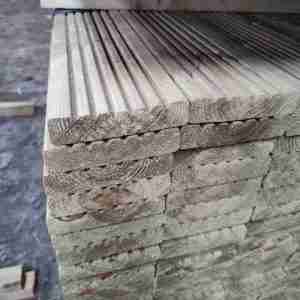
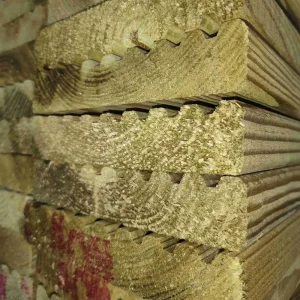
Pressure-treated redwood decking boards used for garden decking and outdoor surfaces where durability, consistent sizing, and weather resistance are required.
Our decking boards are the foundation of high-quality outdoor living spaces across North Yorkshire. We specialise in slow-grown European Redwood, which offers superior density and natural stability compared to standard whitewood alternatives. Every board is kiln-dried and pressure-treated (tanalised) to Use Class 3, ensuring long-term protection against decay and wood-boring insects in external environments.
Redwood is the industry-standard choice for timber decking due to its durability and consistent finish. Because redwood is naturally more resinous than standard spruce, it is less prone to splitting, twisting, and warping when exposed to the British weather.
While C24 structural timber is used for the sub-frames, our redwood decking provides the visible, hard-wearing surface. Our current range features 5-inch wide boards available in 3.6m and 4.8m lengths, offering a robust and traditional aesthetic for any garden size.
Our decking boards are specified for a wide range of outdoor structural work:
Garden Decking: The primary choice for domestic patios, balconies, and seating areas.
Walkways & Boardwalks: Durable enough for heavy foot traffic in garden paths and commercial outdoor spaces.
Raised Platforms: Ideal for elevated decks where a consistent, high-quality aesthetic and structural reliability are required.
Landscaping Features: Used for creating integrated bench seating, step-ups, or decorative borders within timber-framed gardens.
At Ryedale Timber, we ensure our decking stock meets rigorous trade standards to prevent premature failure:
Redwood Stability: Naturally denser than whitewood, providing better fixings-retention and a smoother finish. Use Class 3 Treatment: Pressure-treated to ensure the preservative reaches the core of the timber for maximum rot resistance. Dry-Stored: We manage our own yard in Pickering and store our decking under cover, ensuring it stays straight and true until it reaches your site.
It is essential to understand the “nominal” vs “finished” size when planning your deck coverage to avoid shortages.
| Feature | Premium Redwood Decking | Standard Economy Decking |
|---|---|---|
| Material | Slow-grown Redwood | Fast-grown Whitewood |
| Nominal Width | 5 Inch (Approx 125mm) | Varies |
| Finished Width | Approx 120mm | Often thinner/narrower |
| Storage Condition | Dry-stored under cover | Often stored outdoors |
Important: When calculating your requirements, always allow for a 5mm expansion gap between boards to ensure proper drainage and airflow.
Pressure-Treated (Tanalised): Our boards are treated for external use. However, any timber that is cut, drilled, or notched during installation must be treated with an end-grain preservative to maintain the protective seal.
Simple rule: If you cut it, seal it. Without end-grain treatment, moisture can enter the core of the board, leading to internal rot regardless of the initial pressure treatment.
Straight & Square: We manage our own yard in Pickering to ensure stock is stored correctly. You won’t receive warped or unusable lengths.
Premium Species: We prioritise Redwood over cheaper species to ensure the longevity of your build.
Local Expertise: Deal directly with people who understand construction and landscaping requirements across North Yorkshire.
Redwood decking is the benchmark for high-quality domestic landscaping. At Ryedale Timber, we manage our own facility in Pickering to ensure every length is stored correctly and meets our quality control standards.
We specialise in serving trade and DIY customers across North Yorkshire and East Yorkshire. Our dedicated fleet provides reliable, fixed-price delivery to York, Scarborough, Malton, and Thirsk. We also regularly supply projects in Driffield, Bridlington, Whitby, and Filey.
For rural and coastal builds, we deliver to Helmsley, Kirkbymoorside, Easingwold, Pocklington, Guisborough, and Robin Hood’s Bay.
We deliver our full range of decking to the following areas. Deliveries typically take 3–5 working days.
| Delivery Area | Postcodes Covered | Flat Rate | Minimum Spend |
|---|---|---|---|
| Pickering | YO18 | £5.00 | £50 |
| Malton | YO17 | £10.00 | £100 |
| Scarborough | YO11, YO12, YO13 | £10.00 | £100 |
| Filey | YO14 | £12.00 | £100 |
| Helmsley | YO62 | £15.00 | £150 |
| Kirkbymoorside | YO62 | £15.00 | £150 |
| Bridlington | YO15, YO16 | £15.00 | £200 |
| Whitby | YO21 | £20.00 | £200 |
| Robin Hood’s Bay | YO22 | £20.00 | £200 |
| Driffield | YO25 | £30.00 | £300 |
| York | YO1, YO10, YO19, YO23, YO24, YO26, YO30, YO31, YO32, YO43, YO44, YO51, YO60 | £30.00 | £300 |
| Easingwold | YO61 | £30.00 | £300 |
| Thirsk | YO7 | £35.00 | £300 |
| Pocklington | YO41, YO42 | £35.00 | £350 |
| Guisborough | TS14 | £40.00 | £500 |
The “30cm rule” usually refers to the height of the decking platform from the ground. In the UK, if a deck is more than 30cm (approx. 1 foot) off the ground, it typically requires planning permission. Additionally, for structural safety, any deck at this height or above should have a balustrade or railing installed to prevent falls. Always check with your local authority in North Yorkshire before starting a high-level build.
Building a deck yourself is almost always cheaper than buying a pre-made modular kit or hiring a contractor, as you save significantly on labour costs. However, the “cheapest” option isn’t always the best value. Using premium redwood decking boards and a solid C24 sub-frame may cost more upfront than a budget DIY kit, but it will last twice as long, saving you the cost of a full replacement in a few years.
No, you should never lay decking boards or sub-frame joists directly on soil. Moisture from the ground will cause even pressure-treated timber to rot prematurely. To do it correctly, you should remove the turf, lay a weed membrane, and support your frame on concrete pads, paving flags, or adjustable pedestals. This creates an essential air gap that allows the timber to dry out.
The most common mistakes include:
It is significantly better to use screws. Nails tend to “pop” out over time as the timber naturally moves, creating a trip hazard and a squeaky surface. High-quality, stainless steel or coated decking screws have a threaded shank that grips the joist tightly. This keeps the boards secure and makes it much easier to remove a board in the future if you need to access services beneath the deck.
WhatsApp us
Your basket is currently empty!
Notifications